Dogs of the Balkans
Our rescue operations also take place abroad, especially in countries where conditions for animals are very difficult. Every dog we rescue gets a chance at a new home.
Large populations of dogs without a home.
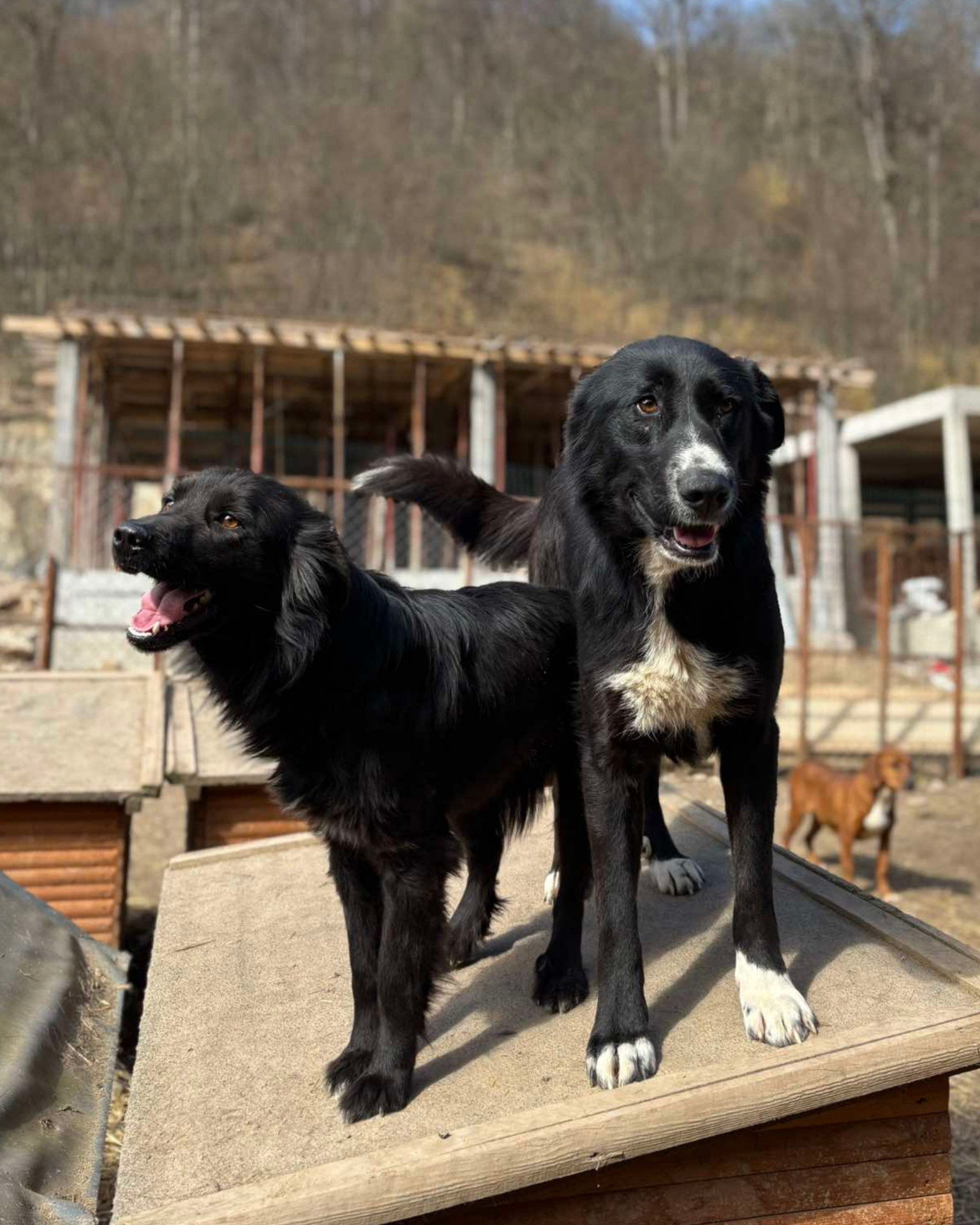
Large populations of dogs without a stable home live in the Balkans. Their daily reality is harsh — hunger, cold, disease and constant danger. Even though it's Europe, in many regions the situation still doesn't match the animal welfare standards we're used to elsewhere.
A large share of these dogs were born right on the street. They've never known safety, regular food or human care. Others were abandoned — often due to relocation, poverty or irresponsible breeding. Without spay/neuter programs the problem keeps deepening and the stray dog population keeps growing.
Despite these conditions, Balkan dogs are often very friendly, quick to learn and grateful. Every adoption isn't just saving one life — it's also hope for the other dogs waiting for their chance.
- 1 000 000+homeless dogsestimates for the Balkan region
- 2countriesBosnia and Herzegovina · Romania
- 10 daysuntil euthanasiaaccording to available information from so-called „death camps“
The figures above are based on available estimates and information from local organisations.
Why do we rescue dogs from Bosnia and Romania?
The problem of abandoned and abused dogs is primarily linked to human actions.
In Czechia we mainly encounter dogs that have been abandoned, dumped, abused, come from puppy mills or irresponsible breeding, or whose owner can no longer care for them.
- —abandonment of dogs
- —abuse of dogs
- —puppy mills and irresponsible breeding
- —irresponsible breeding
- —unwanted litters
- —dogs whose owner can no longer or no longer wants to care for them
The Czech Republic has a system of shelters, veterinary oversight and legal animal protection. That doesn't mean the situation is ideal. The difference is that we don't have a large population of dogs living long-term outside human care and breeding on the streets.
In the Balkans the problem is significantly broader.
Alongside abandonment and abuse, there are also large populations of ownerless dogs, further breeding and insufficient capacity in the care system. In some parts of the Balkans dogs move freely on the streets and in public spaces long-term. Some of them also breed there. More puppies are born who often have no owner, safe place or guaranteed care.
- —large numbers of dogs without a stable owner
- —dogs living long-term on the streets and in public spaces
- —uncontrolled breeding
- —puppies born directly on the street
- —abandonment and dumping of dogs
- —abuse, neglect and killing
- —limited availability of veterinary care
- —insufficient capacity of private shelters and local rescuers
- —differences in the level of animal protection and its enforceability
- —in some regions, catching and subsequent killing of dogs
- —lack of long-term preventive programmes, especially spay/neuter
The problem isn't just individual abandoned dogs. In some areas it's a whole system that keeps rebuilding itself without effective prevention and long-term work.
When the problem is solved by "cleaning the streets"
In some areas the problem of large numbers of ownerless dogs is mainly addressed by catching them from the streets and placing them in facilities that may be overcrowded. In some cases they are also killed.
Among animal protection groups some such facilities are called "death camps". This is not a label for all shelters, nor is the situation the same across Romania or Bosnia. Conditions vary significantly by region and facility. Serious cases are not only a thing of the past, though.
In Romania the European Parliament is also addressing the conditions in some municipal shelters and the treatment of caught dogs in 2026. Parliamentary questions described reports of facilities that, according to animal protection organisations, effectively operate as killing stations.
In 2024, for example, 60 dogs were killed in the Târgu Jiu shelter within a single hour. The case was subsequently addressed at the European Parliament level too.Source: European Parliament
In 2025 data concerning several Romanian districts was also presented to the European Parliament, according to which 3,871 dogs were caught in 2024 and 3,286 of them were killed.Source: European Parliament
That is exactly what we want to offer an alternative to. That's why it's important for us to work directly on the ground and support people trying to change this system.
That's why we rescue dogs from Bosnia and Romania
We don't want to claim that there are no dogs in need in the Czech Republic. There are. But helping one Czech dog and helping dogs in the Balkans are not mutually exclusive.
In the Balkans we try to tackle the problem where it starts — and at the same time help specific dogs who need help right now.
That's why we combine several things: dog rescue, spay/neuter programmes, veterinary care, support for local rescuers and subsequent adoptions.
Bringing dogs to the Czech Republic is only one part of this work. It is not the solution to the whole problem.
A dog we rescue and find a suitable home for gets a chance at a new life. The freed-up capacity of a local rescuer can also mean the possibility of taking in another dog. And spaying/neutering helps prevent more homeless dogs from being born on the streets.
It is precisely the combination of rescue and prevention that makes the most sense to us.
Spaying and neutering solves part of the problem right where it starts
If we want to reduce the number of homeless dogs long term, rescuing those already on the street isn't enough. We also have to prevent more from being born.
That's why the spay/neuter program is an important part of our work. A rescued dog means one specific life. Spaying and neutering can prevent the birth of more puppies who might otherwise end up in the same situation.
Spaying and neutering alone won't solve the problem. It has to be paired with responsible ownership, education, veterinary care and a functioning animal welfare system. That's why we combine prevention with rescue.
A country with a serious situation.
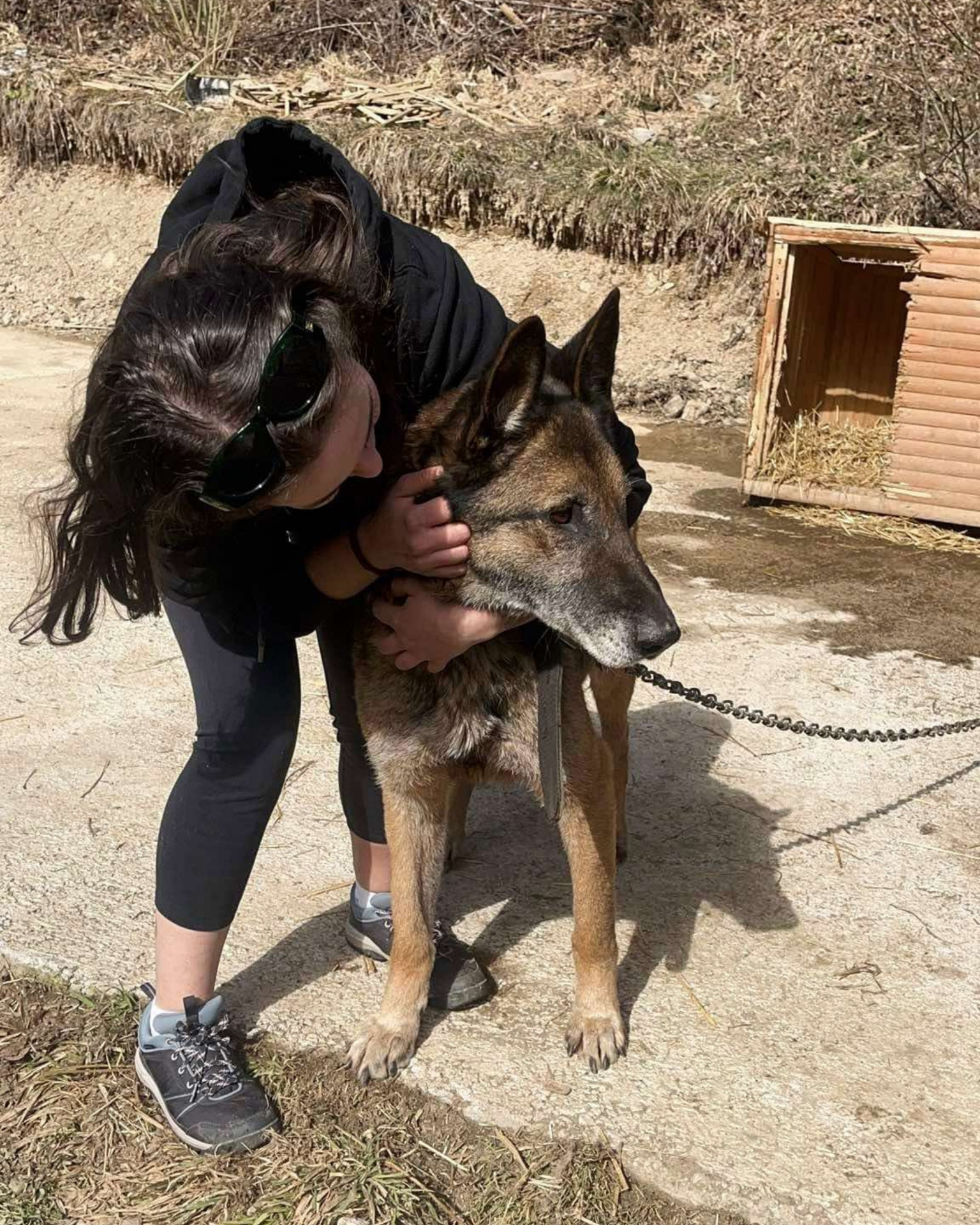
The situation in Bosnia and Herzegovina has long been very serious. The country struggles with a large number of abandoned and stray dogs living in poor conditions, often suffering from hunger, disease and a lack of basic care. According to local organisations, this problem stems from a combination of inadequate legislation, weak enforcement of animal protection laws and a lack of systematic spay/neuter programs.
Almost every region suffers from dog overpopulation, with dogs surviving on the streets, in landfills or abandoned buildings, exposed to extreme weather and human indifference.
In some places, according to available information, dog-catching facilities still exist that are referred to as "death camps" — unclaimed dogs there may be euthanised once a deadline passes.
Despite this reality, many dedicated volunteers and organisations work in Bosnia and Herzegovina to change the situation. They provide dogs with food, veterinary care, organise spay/neuter surgeries and find new homes, mostly abroad.
One of the most serious situations in all of Europe.
The situation in Romania is among the most serious in all of Europe. Uncontrolled breeding of dogs has long led to a large number of homeless animals. Many of them end their lives on the streets, facing hunger, disease and constant danger.
Some dogs are caught into state facilities meant to control the stray population. In practice, however, these facilities are often overcrowded and are referred to as "death camps". According to available information, dogs there live under stress and without adequate care, and for many it is the last stop if a home or rescue isn't found soon. There are also reports of misuse of euthanasia subsidies and of inhumane killing methods.
Despite these problems, many non-profit organisations and volunteers in Romania work actively to address the situation. They rescue dogs from the streets and from "death camps", provide veterinary care, arrange spay/neuter surgeries and find them new homes, mostly abroad.
Every adoption represents real change — not only for that specific dog, but for the whole overloaded system.
So why do we bring some dogs to the Czech Republic?
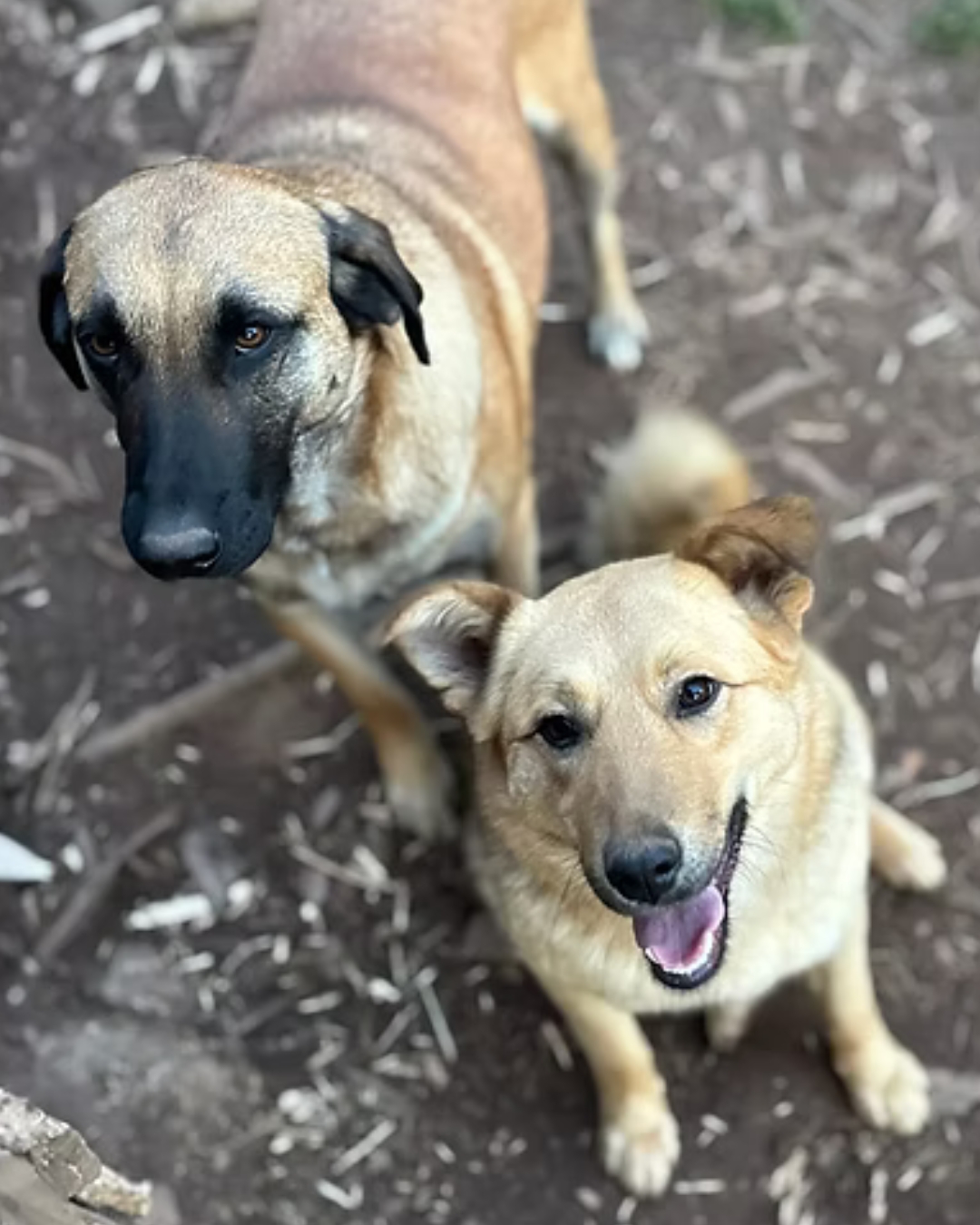
Spaying and neutering helps solve the future. But a dog who is living on the street today, who is sick, injured, at risk or waiting in an overcrowded facility, needs help now.
And that is exactly where adoptions to the Czech Republic come in.
Why don't we find homes for them in their own country?
Ideally, of course, every rescued dog could stay in their own country and find a home as close as possible to where they lived.
In Bosnia and Romania, however, it is very difficult to find enough suitable local homes. Local rescuers often know dozens or even hundreds of dogs who need help, but there is only a tiny fraction of people willing to actually adopt a dog, provide veterinary care, quality food and long-term responsible care.
That is why homes in more developed European countries are important for these dogs. Czechia has a relatively large circle of people willing to adopt dogs from abroad. This means we can look for a home not only based on who wants to take a dog, but primarily on what that specific dog truly needs.
So it is not just about finding someone who wants a dog. It is about finding a person who can offer them a safe and stable life and is ready to take long-term responsibility for them.
One adoption can help other dogs too
- 1
A rescued dog
The starting point on the road to happiness.
- 2
A suitable home in the Czech Republic
A safe home and a loving family.
- 3
Freed-up capacity for the local rescuer
Room for another dog in need.
- 4
Room to take in another dog in need
The chain of help grows longer.
- 5
Another rescue
A new life begins right now.
Bringing a dog to the Czech Republic is therefore not only about one dog getting a new home. For a local rescuer it can also mean freeing up space, time and resources for another dog waiting for help.
If a rescuer has limited capacity, they cannot keep taking in more dogs indefinitely. Every safely placed dog can therefore create space for another rescue.
It doesn't mean that every adopted dog automatically saves another. It means that international adoption can be one of the tools that enables local rescuers to help more dogs.
International adoption can free up a local rescuer's capacity and allow them to take in another dog.
Our goal is not to bring as many dogs as possible
We don't want to transport dogs just to reduce their numbers in the Balkans. Every relocation must make sense.
A dog must be medically ready for the journey, a suitable home must exist for them, and their adoption must be responsibly prepared. That is why the number of dogs brought here is not what matters to us, but how many specific dogs we can truly change life for the better.
It's not about the number of dogs we bring. It's about every dog we bring getting a truly safe and suitable home.
At the same time, we know that adoptions alone won't solve the problem. That's why spay/neuter programmes, veterinary care and support for local rescuers on the ground are equally important to us.
Transports are not the whole solution
Bringing dogs to the Czech Republic will not, on its own, solve the stray dog problem in Bosnia or Romania. If we only took dogs abroad while more kept breeding uncontrolled on the ground, the problem would continue.
That's why we build our work on several interconnected pillars.
- Rescue
Help for specific dogs who are in need right now.
- Spay & neuter
Preventing further uncontrolled breeding.
- Veterinary care
Treatment of sick and injured dogs, and prevention.
- Adoption
Finding safe and suitable homes.
- Support for local rescuers
Help for the people working directly on the ground.
- Education
Prevention, responsible ownership and changing attitudes to spaying and neutering.
We don't want to transfer the problem to the Czech Republic
We understand the concern that bringing dogs from abroad may pose a health risk. That is exactly why simply loading a dog into a van and driving it over is not acceptable to us. Every transport must be prepared with regard to the individual dog's health, the applicable veterinary rules and, above all, its safety.
How we prepare dogs for the journey
Before the journey, every dog goes through veterinary preparation appropriate to its age and state of health. It leaves for its new family:
- vaccinated against rabies and infectious diseases
- microchipped and properly identified
- dewormed
- treated against fleas and other external parasites
- tested for Lyme borreliosis
- tested for ehrlichiosis
- tested for anaplasmosis
- tested for heartworm (dirofilariasis)
The transport also includes the required veterinary documentation and meeting the conditions for travel. If a dog's health requires further examination or treatment, we address it individually.
Spaying and neutering is part of responsible adoption
Dogs older than one year leave for their new families already spayed or neutered.
In puppies, the procedure is carried out only once they reach a suitable age. New owners therefore commit to arranging it in line with the vet's recommendation.
A safe transport doesn't end at the vet
Just as important as the medical preparation is finding a genuinely suitable home for the specific dog. We therefore assess the dog's suitability for adoption and also screen the adoptive family — their means, experience and the conditions they can offer that particular dog.
We're not looking for just anyone who will take a dog. We're looking for an adoption that works long term and a safe home.
Our goal isn't to bring in as many dogs as possible. Our goal is to help the specific dogs for whom we can ensure a safe journey, appropriate veterinary care and a suitable home.
More important than the number of dogs we bring in is the quality of every adoption.
We help Czech dogs too
Helping dogs abroad doesn't mean Czech dogs matter less to us. There are dogs in need in the Czech Republic too — abandoned, abused, dogs from puppy mills or dogs whose owners can no longer care for them.
But the Czech problem takes a different form than the large street populations in some parts of the Balkans. So we support help for dogs in the Czech Republic as far as our means allow, while also working abroad where we see the chance of long-term impact.
We don't just want to import dogs from the Balkans
We want to help change the conditions that put dogs there in need in the first place.
Rescue helps dogs who need help now. Spaying and neutering helps prevent more dogs from being born into the same situation. Adoptions can free up capacity for local rescuers. Supporting local organisations helps address the problem on the ground.
It's the combination of these approaches that we believe makes the most sense.
One adoption helps one dog.
Prevention can help whole generations of dogs.
The combination of both makes the most sense.